How Circus Workshops Can Bring Key Primary Curriculum Books to Life
Circus skills workshops give primary school children a physical, creative way to connect with the books and stories they're studying — turning themes of performance, adventure and resilience from the page into something they can actually experience. Elevate Circus Workshops can tailor a session to your current class reader or topic, arriving with a professional tutor and all equipment directly to your school.
Many of the most engaging texts in the UK primary curriculum have one thing in common — the magic, excitement, and curiosity of the circus.
From imaginative storytelling in Key Stage 1 to deeper themes of history, identity, and resilience in Key Stage 2, circus-themed books offer rich opportunities for learning. But what if children could go beyond reading about the circus… and experience it for themselves?
Bringing in a professional workshop provider like Elevate Circus Workshops allows schools to transform these texts into immersive, cross-curricular learning experiences that deepen understanding, boost engagement, and bring lessons to life.
Find out more about our circus workshops for schools.
The Power of Experiential Learning
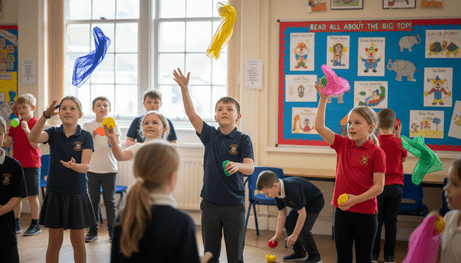
When children physically engage with a theme they are studying, they:
Retain information more effectively
Develop deeper emotional understanding
Engage more fully in writing and discussion
Build confidence in expressing ideas
Circus workshops provide a unique opportunity to connect physical experience with literacy, history, and creativity.
The Circus Ship (Y1/2)
Themes: Animals, Rhythm, Empathy
This beautifully rhythmic story introduces young children to a troupe of circus animals and their journey.
A circus workshop can support learning by:
Recreating animal movements through circus play
Exploring rhythm through juggling scarves and movement
Encouraging role play and storytelling
Children can physically embody characters, helping them understand emotions, actions, and story structure.
Leon and the Place Between (Y3/4)
Themes: Magic, Illusion, Imagination
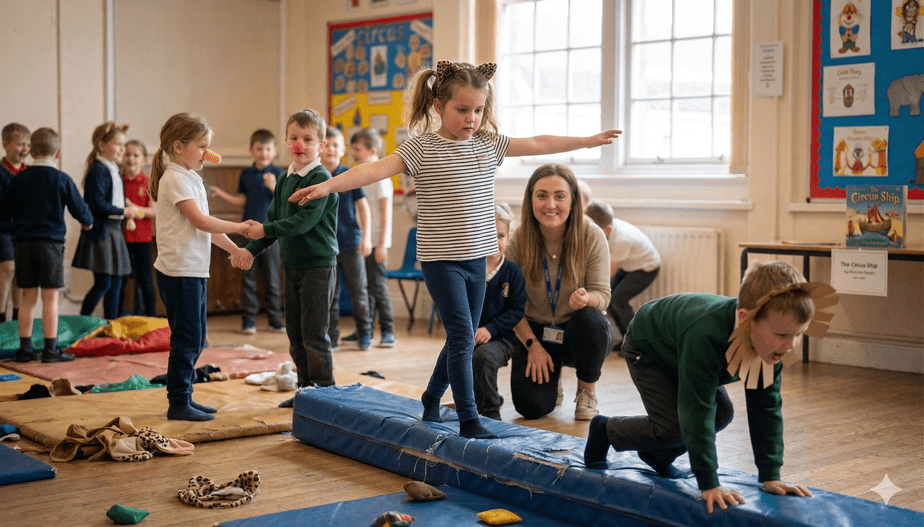
This text is rich in imagery and descriptive language, making it perfect for creative writing.
Circus workshops enhance this by:
Introducing illusion-style props (scarves, disappearing tricks)
Encouraging performance and dramatic expression
Helping children explore “show-not-tell” through movement
Children begin to understand how atmosphere and mystery can be created — not just written.
The Man Who Walked Between the Towers (Y5)
Themes: Risk, Achievement, Real Events
This inspiring true story introduces children to Philippe Petit’s high-wire walk.
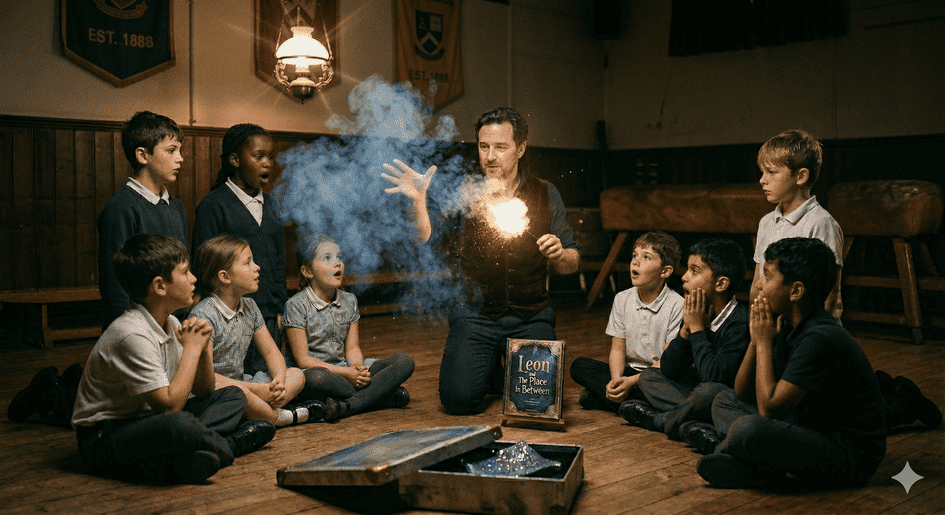
Circus workshops can support learning by:
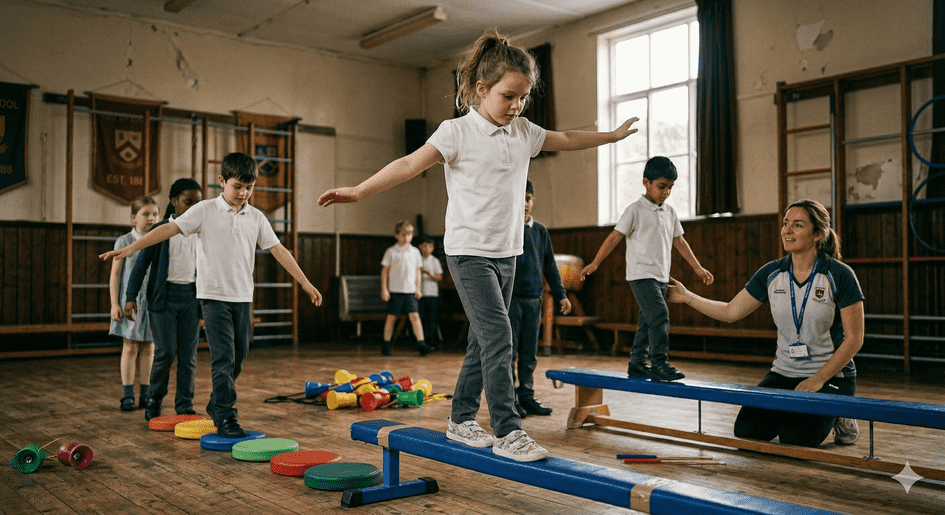
Demonstrating balance and control through safe equipment
Exploring themes of risk, determination, and preparation
Inspiring journalistic writing and debate
Children gain a physical sense of balance and focus, helping them better understand the scale and significance of the story.
Hetty Feather (Y6)
Themes: Victorian Life, Identity, Resilience
This powerful novel explores life in a travelling circus alongside themes of hardship and social history.
Circus workshops can deepen understanding by:
Bringing the idea of a travelling troupe to life
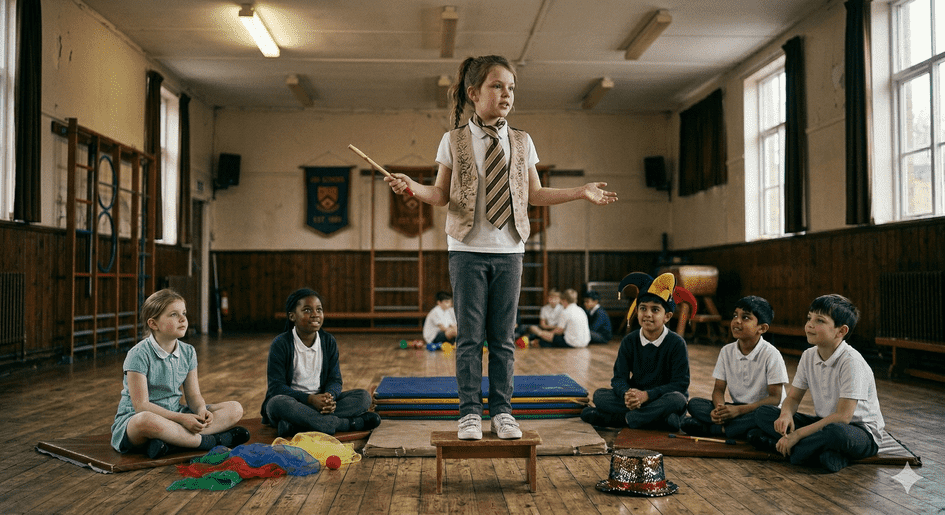
Exploring performance as storytelling
Supporting discussion around resilience and identity
This is particularly powerful when combined with history lessons on Victorian Britain.
Why Schools Choose Elevate Circus Workshops
By linking workshops directly to curriculum texts, schools can:
Enhance literacy outcomes
Support cross-curricular learning
Engage all learners, including reluctant writers
Provide memorable, meaningful experiences
Workshops can be tailored to specific year groups, books, and learning objectives — making them a valuable addition to any literacy or enrichment programme.
Conclusion
Circus-themed texts already capture children’s imaginations — but bringing those themes into a real, physical experience takes learning to another level.
With the support of Elevate Circus Workshops, schools can transform reading into doing, helping children connect more deeply with stories, characters, and ideas in a way that lasts.
FAQs
Q: How can circus workshops be linked to books children are studying?
Many primary curriculum books feature circus, adventure or performance themes, or characters who overcome challenges through resilience and skill — a live workshop brings those themes to life physically, letting children experience what they've been reading about rather than just discussing it.
Q: Do you tailor the session to a specific book or topic?
Yes — where a school lets us know which text they're studying, we can shape the session's framing and activities to echo relevant themes, characters or settings from the book.
Q: What skills are used to bring stories to life?
Sessions draw from juggling, diabolo, plate spinning, poi, hula hoop, flower sticks, Chinese ribbons and balance skills, which can be woven into storytelling or character-based activities depending on the book.
Q: Is this suitable as part of a themed reading week or book week?
Yes — it works particularly well as the physical, hands-on centrepiece of a themed reading week, giving children a memorable experience to anchor their writing and discussion around.
Q: What age groups does this suit?
Primary-aged children across the full range, with instructors adjusting complexity and pace to suit the year group and the book being studied.
Q: Does this support literacy outcomes, or just PE?
Both — while the physical activity supports PE and motor skill objectives, the storytelling and character framing can feed directly into literacy work, giving children first-hand material to write and talk about.
Q: How much space and time is needed?
Roughly a tennis-court-sized indoor space as a minimum; session length is flexible, from a single class slot to a full workshop day depending on your plans.
Q: Are instructors experienced in tying sessions to classroom topics?
Yes — our instructors regularly adapt workshops to complement what schools are teaching, working with staff beforehand to align the session with the book or topic.
Q: How do we book a themed session linked to our curriculum book?
Get in touch with your school, the book or topic you're studying, year groups and preferred dates, and we'll build a session around it.
