Using Circus Skills to Support Physical Literacy in Primary Schools
Circus skills are one of the most effective tools for developing physical literacy in primary school children, building balance, coordination, spatial awareness and body confidence through non-competitive, hands-on activity. Unlike traditional PE, circus workshops consistently engage children who don't usually thrive in sport — and Elevate Circus Workshops delivers these sessions to primary schools across all of mainland UK.
Physical literacy is becoming an increasingly important focus in UK primary schools — and for good reason. As screen time rises and opportunities for active play reduce, schools are looking for creative, inclusive ways to help children move confidently, joyfully, and safely.
Circus skills workshops offer a powerful, engaging way to develop physical literacy while keeping children motivated and involved. From balancing and coordination to spatial awareness and teamwork, circus activities naturally align with the core goals of primary PE — while feeling exciting and different from traditional sports.
What Is Physical Literacy?
Physical literacy refers to a child’s ability, confidence, and motivation to be physically active for life. It goes far beyond fitness or sport and includes:
Balance and coordination
Agility and control
Confidence in movement
Willingness to participate
Understanding how the body moves
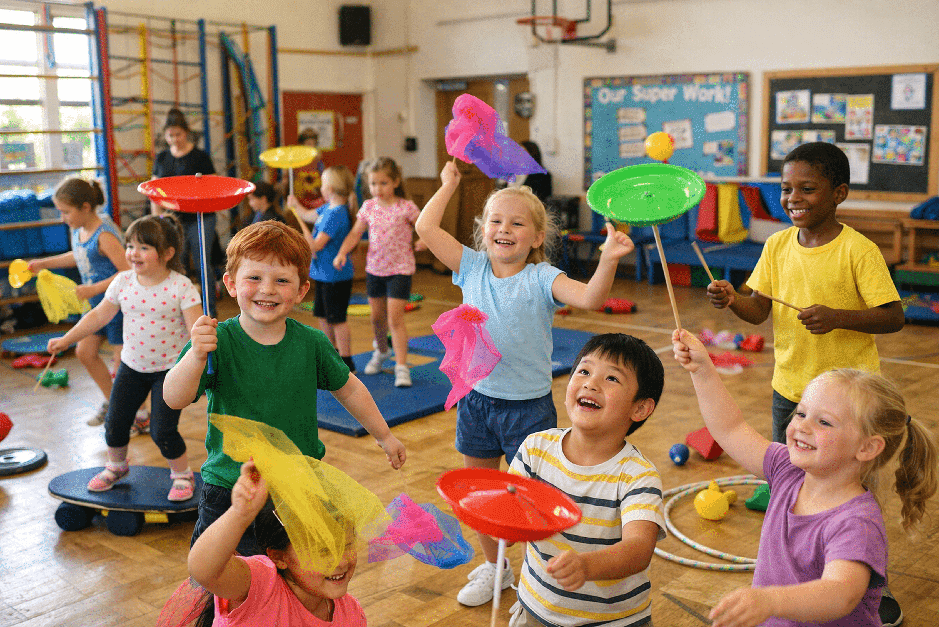
Circus skills provide a playful, pressure-free environment where children can explore movement and build these core abilities naturally.
Why Circus Skills Are Perfect for Physical Literacy
1. Balance & Stability
Skills such as plate spinning, beginner stilts, tightwire-style balance equipment, and introductory unicycling develop:
Core strength
Postural awareness
Stability and control
Children learn through experimentation rather than competition, which encourages resilience and self-belief.

2. Coordination & Motor Skills
Juggling activities — including scarves, balls, diabolo, devil sticks, poi, and Chinese ribbons — are excellent for developing:
Hand–eye coordination
Bilateral movement
Fine and gross motor skills
Unlike traditional ball games, juggling removes pressure and allows children to progress at their own pace, making success accessible to all.

3. Agility, Movement & Spatial Awareness
Circus workshops encourage children to move dynamically within shared spaces, helping them to:
Judge distance and timing
Move safely around others
Develop rhythm and body awareness
These skills translate directly into improved playground confidence and classroom focus.

4. Confidence Without Competition
One of the biggest barriers to physical activity is fear of judgement or comparison.
Circus skills are:
Non-competitive
Self-paced
Encouraging of individual progress
Children measure success against themselves rather than others, which helps build confidence and long-term motivation.

Linking Circus Skills to the Primary PE Curriculum
Circus workshops align closely with National Curriculum PE aims, including:
Developing fundamental movement skills
Increasing confidence, competence, and control
Engaging in physical activity that supports health and wellbeing
Working collaboratively and communicating effectively
They can be delivered as:
Curriculum-linked PE sessions
Enrichment days
Wellbeing initiatives
Transition and reward days
Inclusive Physical Literacy for All Abilities
Circus skills are highly adaptable, making them ideal for:
Mixed-ability classes
SEN pupils
Children with coordination challenges
Children lacking confidence in traditional PE
Every child can participate meaningfully, regardless of starting point.

Long-Term Benefits Beyond the Workshop
Schools often report that children show:
Improved confidence
Greater willingness to participate in PE
Better focus in the classroom
A more positive relationship with movement
By making physical activity enjoyable, circus skills help children develop healthy habits that last.
Why Schools Choose Circus Skills Workshops
Schools choose circus workshops because they:
Engage all pupils, not just sporty ones
Require no previous experience
Work in almost any indoor or outdoor space
Are delivered by experienced, enthusiastic tutors
Provide measurable physical and emotional benefits
Conclusion
Circus skills workshops offer a creative, inclusive, and effective way to support physical literacy in primary schools. By focusing on balance, coordination, confidence, and enjoyment, they help children build the foundations for a lifelong relationship with physical activity — all while having fun.
