The best end-of-term reward day is one every child joins in with, not one they sit and watch. A circus skills day gives the whole school a live show, a hands-on workshop for every class and a finale to finish, and every child goes home with a new trick. Elevate Circus Workshops sends DBS-checked circus performers to primary schools right across mainland UK, with prices from £225.
Every term ends the same way. The children have worked hard, the behaviour charts are full, and someone in the staffroom says: "Shall we just do a film and a disco again?" Here's why it's worth trying something different this time, and exactly how a circus reward day works.
What's wrong with a film and a disco?
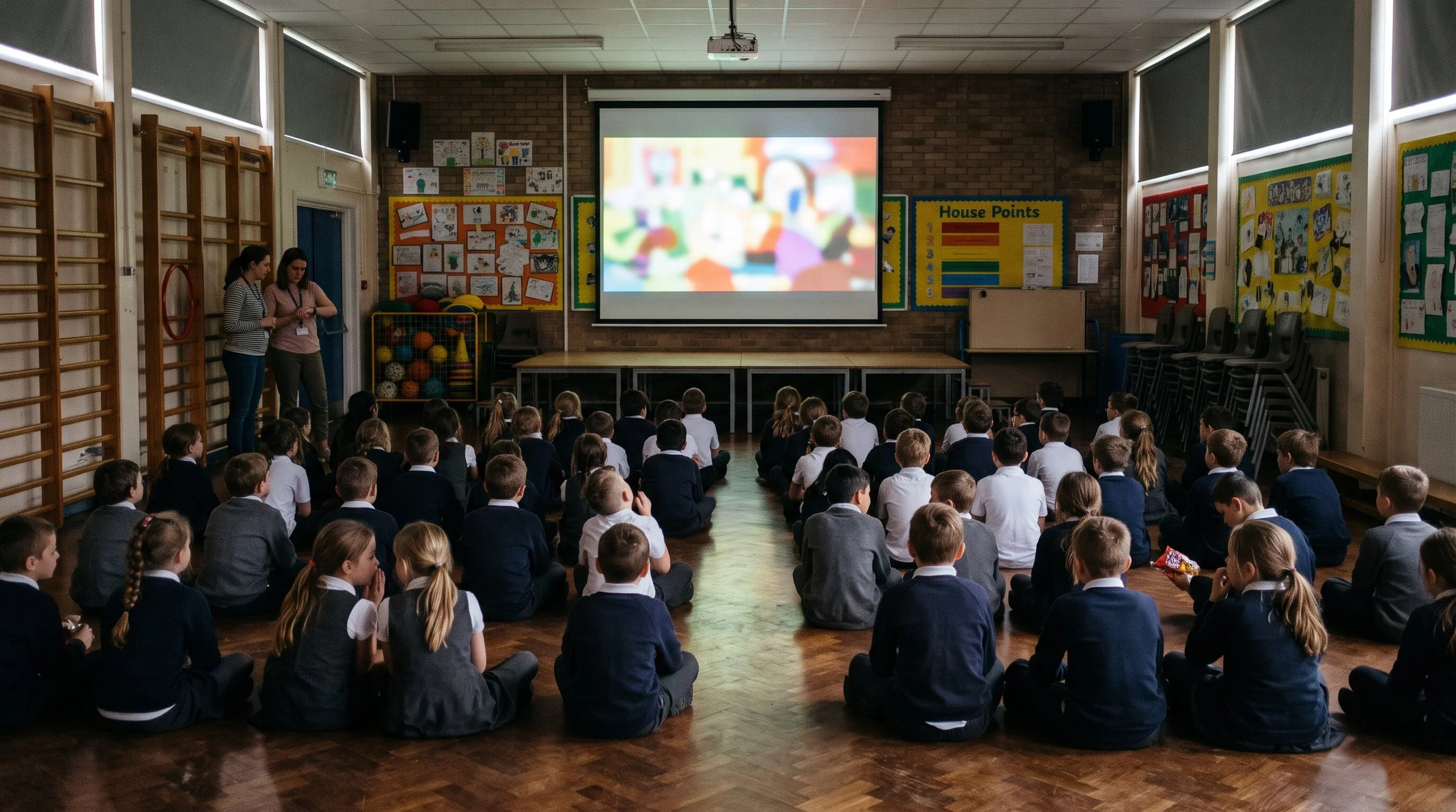
Nothing, really. They're easy to organise and the children enjoy them. But they're also forgettable.
The film is usually one half the class has already seen at home, and the other half spends it chatting.
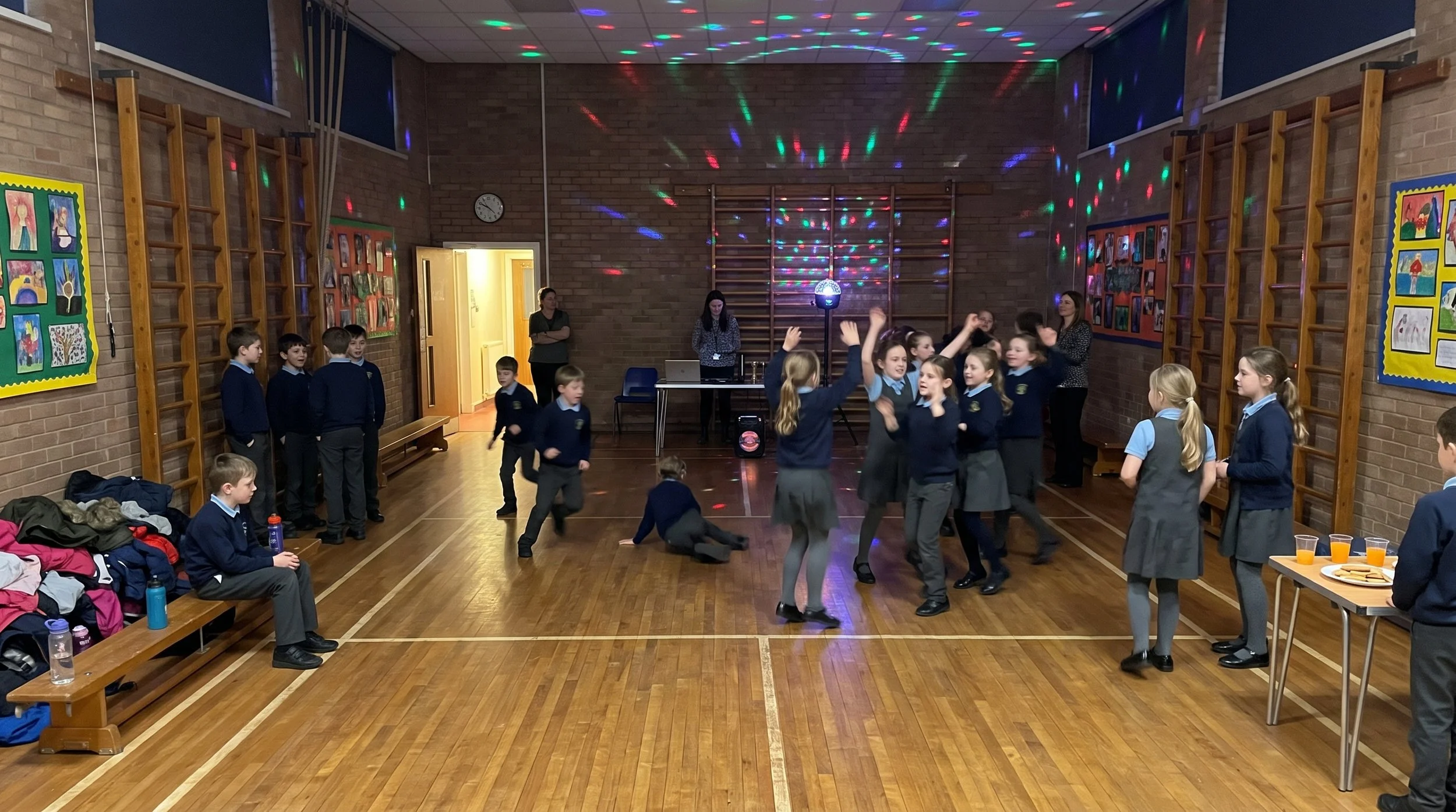
The disco works brilliantly for the confident dancers. The rest find a quiet corner by the coats and wait for the squash.
By Monday, nobody's talking about either.
A reward day should feel like a reward. It should be something the children couldn't do on an ordinary afternoon, and something they'll still be telling their parents about at the weekend.
Why a circus day makes a better reward
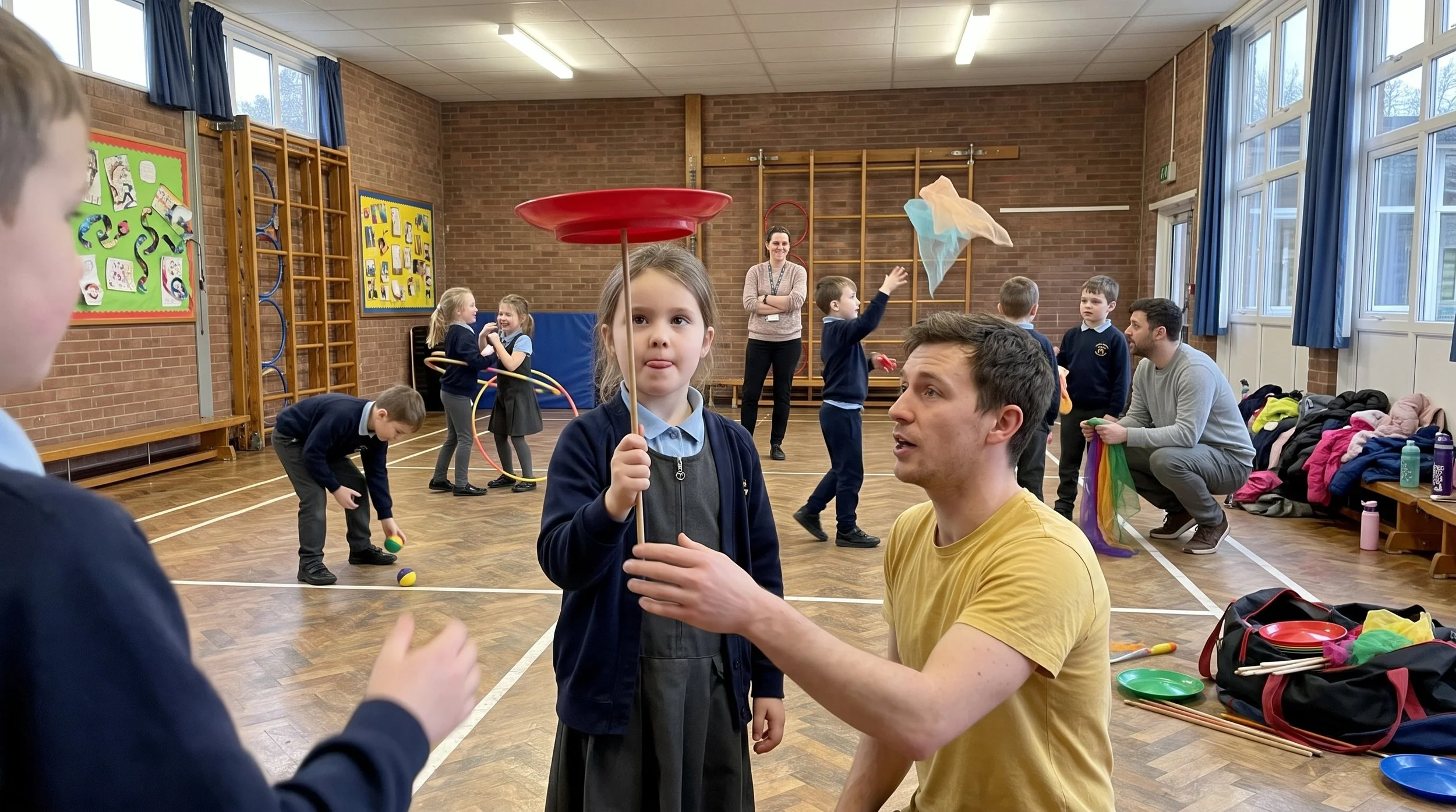
Every child joins in. Nobody walks in already able to spin a plate, so the sporty child, the shy child and the child who never puts their hand up all start in exactly the same place. There's no audience to hide in.
Everyone succeeds at something. There's a skill for every child: floating scarves for the youngest, juggling balls, diabolo, poi and hula hoops for those who want a challenge. The first time a plate keeps spinning on its own gets the biggest cheer of the day.
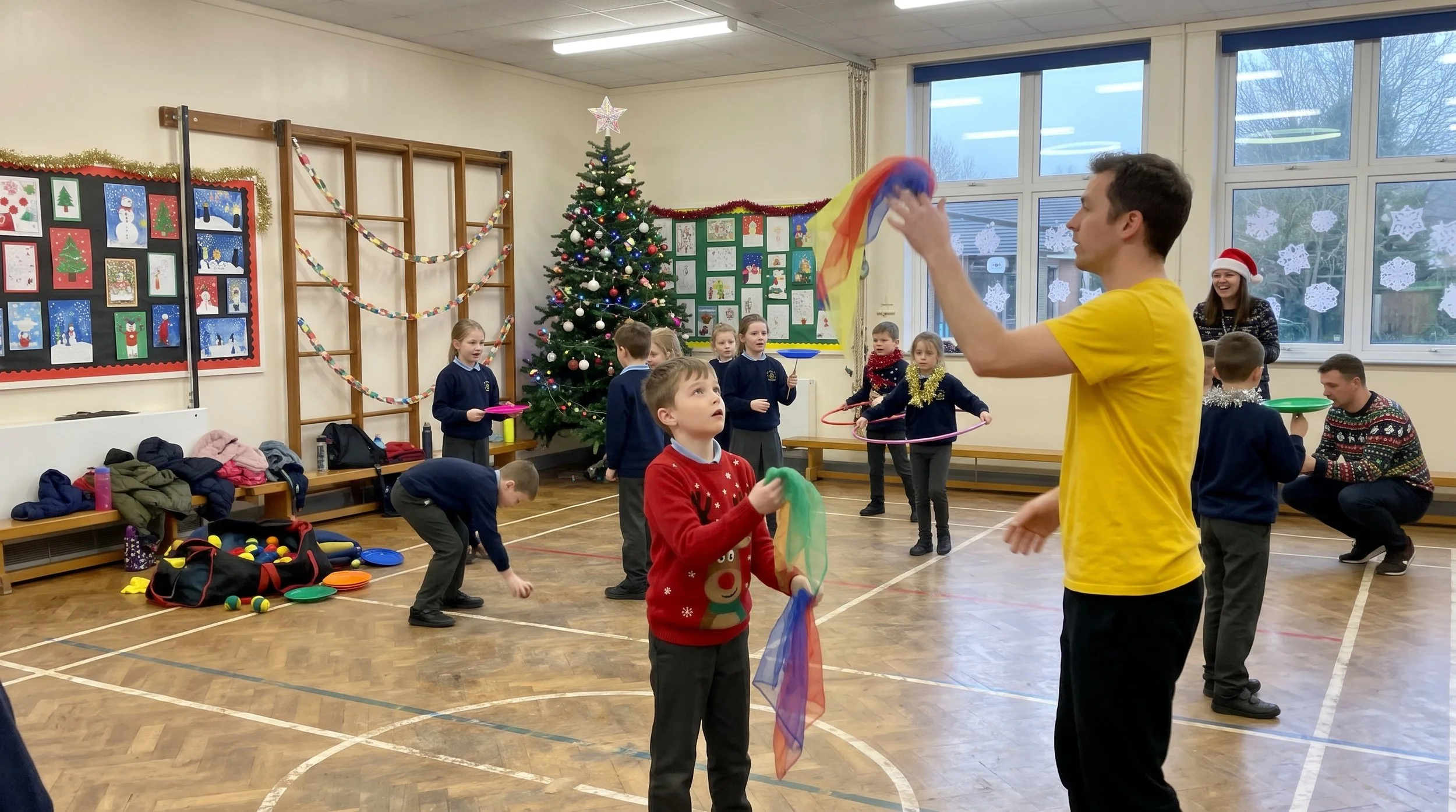
It works for every year group. Reception children love the scarves and ribbons. Year 6s who are far too cool for a disco will happily spend twenty minutes trying to get a diabolo into the air.
It builds the things you've been rewarding. Persistence, teamwork, patience and cheering each other on. The day quietly reinforces the behaviour you're celebrating.
It's inclusive. Most of our performers have years of experience with SEN groups, and every child can take part at their own level. Read more in our post on how circus skills workshops support children with SEN.
How a circus reward day works
Arrival and set-up. Your performer arrives about 30 minutes before the start with all the equipment. A hall or gym roughly the size of a tennis court is ideal.
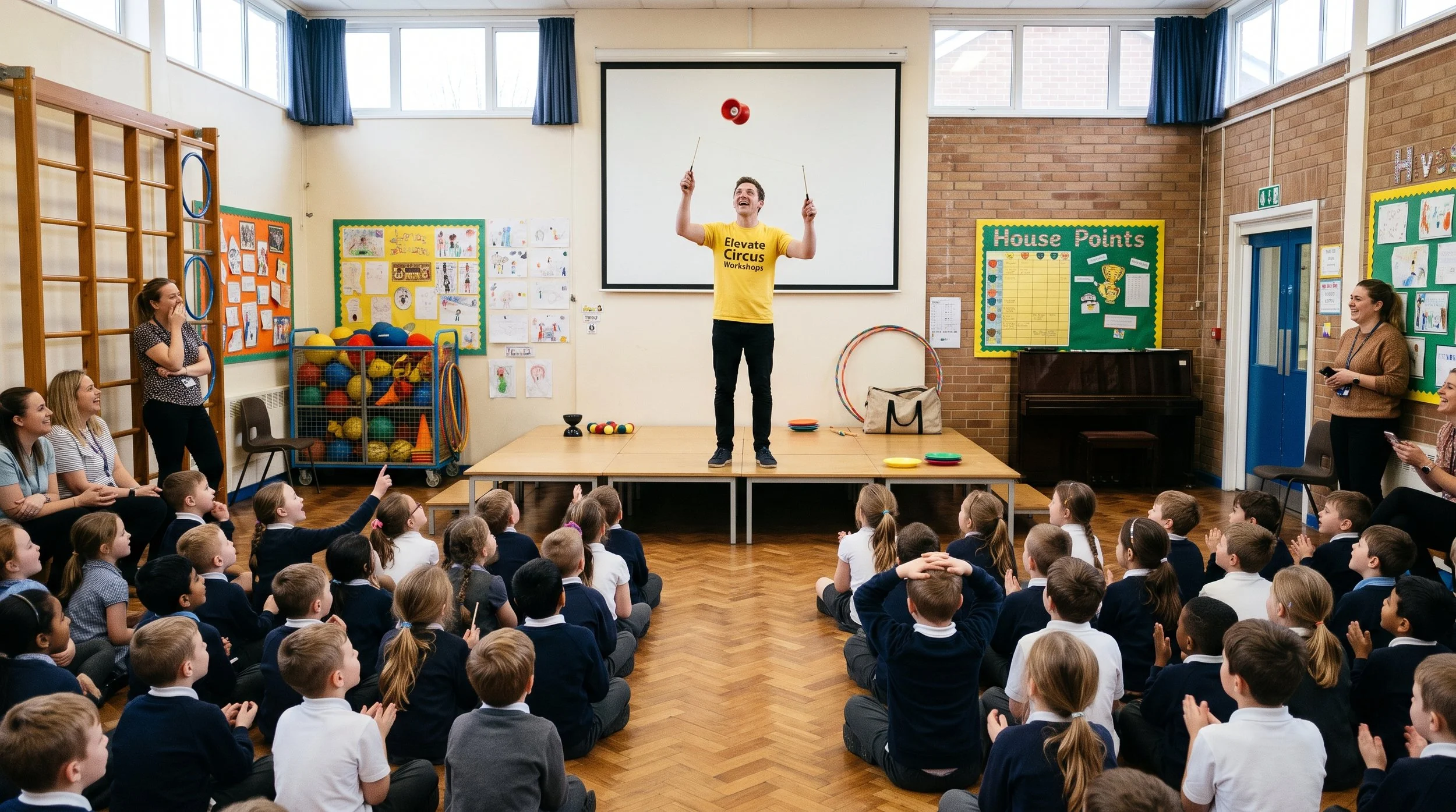
The show. The day opens with a live circus demonstration for the children. It's the moment the whole school decides they can't wait for their turn.
Class workshops. Each class gets its own hands-on session. The performer teaches each skill, gives one-to-one tips and lets the children move on to whatever they enjoy most. Groups of up to 30 to 35 work best.
The finale. Each session ends with a group challenge, such as the most plates spinning at once, and plenty of noise.
Over a full school day, one performer sees around 280 children. If your school is bigger, we simply add another performer. Two performers on the same day just need two suitable spaces.
We recommend running the day indoors. A hall works whatever the weather, the floor is reliable for stilts and pedal-gos, and the children stay focused.
Which circus skills do the children try?
A typical reward day includes:
Juggling with balls, bean bags and scarves
Plate spinning
Diabolo
Poi and flower sticks
Hula hoops and ribbons
Beginners' stilts and pedal-gos
The performer chooses the mix to suit each year group, so younger children get gentler skills and older children get more of a challenge.
When to book an end-of-term reward day
Reward days work at the end of any term:
Christmas: the last week before the holidays, when everyone's too excited for normal lessons.
Easter: a lift before the spring break.
Summer: the last weeks of the year, including Year 6 leavers' celebrations. See our post on Year 6 leavers' circus days.
The last week of every term is the busiest, so book as soon as you have a date. If your date is flexible, an earlier day in the week gives you the widest choice of performers.
How much does a circus reward day cost?
Our workshops start from £225, and we never quote below that. A full school day starts from around £325 per performer between October and Easter, when our winter prices are lower. In the summer term it's a little more. The final price depends on the date, how many performers you need and where you are. See our pricing page for how quotes are worked out.
There's no charge for the equipment, and there's nothing for the school to set up beyond clearing a space.
Why book with Elevate Circus Workshops?
More than 150 professional performers across mainland UK, so there's usually someone local to you.
Every performer is DBS checked and holds their own public liability insurance (typically £5-10 million).
We've worked with schools, the BBC, Sky, the NHS and the National Trust.
We pay our performers fairly, in line with Equity's recommended rates.
Frequently asked questions
How many children can take part in a circus reward day? One performer works with groups of up to 30 to 35 children at a time and sees around 280 children over a full day. For a bigger school, we add more performers.
What space do we need? A clear indoor space roughly the size of a tennis court, such as a school hall or gym.
Is it suitable for Reception and Key Stage 1? Yes. Younger children start with scarves, ribbons and feathers, and move on to other skills when they're ready.
Can children with SEN take part? Yes. Our performers adapt every skill so each child can join in at their own level.
How much does it cost? Workshops start from £225. A full school day starts from around £325 per performer from October to Easter.
Book your reward day
Email us at info@circusworkshops.co.uk with your date, your school's location and roughly how many children you have. We reply within 48 hours.
